
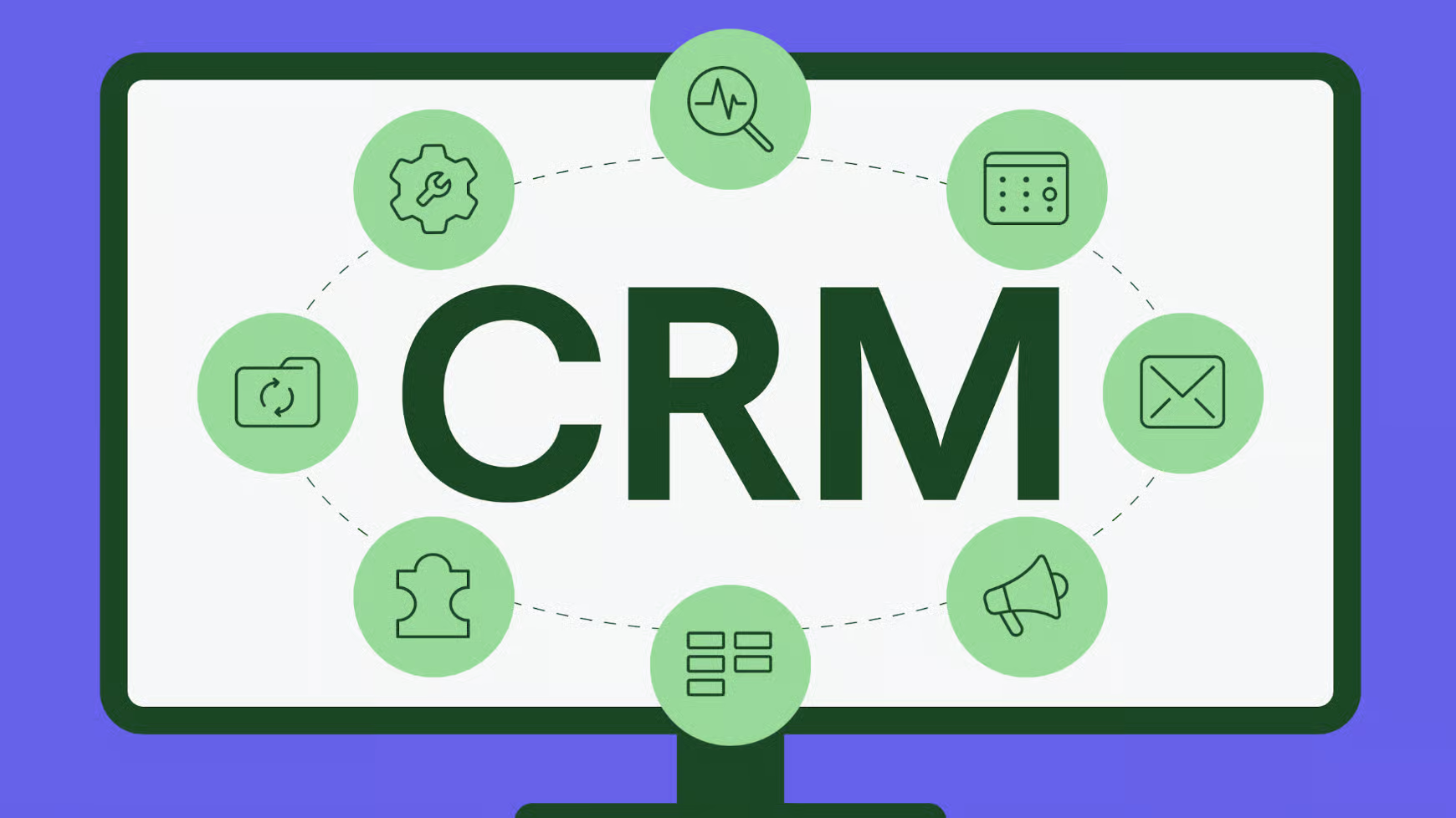
In today’s competitive business environment, maintaining strong customer relationships is just as important as attracting new customers. Businesses need efficient ways to organize customer information, monitor interactions, manage sales opportunities, and provide personalized support. This is where crm software becomes an essential business tool. By bringing customer data and relationship management activities into one centralized platform, businesses can improve productivity, strengthen communication, and create better experiences for their customers.
Whether a company is a small startup or a large organization, the right customer relationship management system can help teams work more efficiently. Modern solutions offer automation, analytics, communication tools, and integrations that make managing customer relationships easier and more organized.
What Is CRM Software?
CRM software is a digital solution designed to help businesses manage relationships and interactions with current and potential customers. Instead of keeping customer details across spreadsheets, emails, notebooks, and disconnected applications, companies can store important information in one centralized system.
A typical CRM platform can contain customer names, contact information, communication histories, purchase records, sales opportunities, service requests, and other relevant details. Authorized employees can access this information when needed, helping them understand each customer’s history and provide more informed assistance.
Modern systems go beyond basic contact management. They can support sales, marketing, customer service, reporting, automation, and collaboration, making them valuable across many areas of an organization.
Why Customer Management Matters
Customers expect businesses to respond quickly, communicate clearly, and understand their needs. When information is scattered across multiple systems, employees may struggle to provide consistent service. Important messages can be missed, follow-ups can be forgotten, and sales opportunities may be lost.
A centralized customer management system helps solve these challenges. Employees can view relevant customer information without searching through multiple applications. Sales representatives can track leads, customer service teams can review previous interactions, and managers can analyze business performance.
Better organization can also improve customer trust. When employees understand a customer’s previous conversations and needs, they can deliver more personalized and useful experiences.
Essential Features of Modern CRM Software
Centralized Customer Information
One of the most important features of crm software is centralized data management. Businesses can maintain customer profiles containing contact information, communication records, preferences, transactions, and other useful details.
Having this information in one place reduces duplication and makes it easier for employees to find what they need. It also helps different departments maintain a consistent understanding of customer relationships.
Sales Pipeline Management
Sales teams often manage numerous prospects at different stages of the buying process. CRM platforms provide visual pipelines that allow representatives to track leads from initial contact through qualification, proposal, negotiation, and closing.
This makes it easier to identify promising opportunities and determine which prospects need attention. Managers can also monitor pipeline activity and evaluate whether sales teams are progressing toward their goals.
Contact and Interaction Tracking
Businesses interact with customers through email, phone calls, meetings, chat, and other communication channels. Keeping track of these interactions is essential for maintaining continuity.
CRM systems can organize interaction histories so employees can quickly understand what has already been discussed. This prevents customers from repeatedly explaining the same issue and helps employees deliver more consistent support.
Marketing Automation
Modern customer management platforms can assist marketing teams with repetitive tasks. Businesses can use automation to organize leads, send targeted communications, schedule campaigns, and track engagement.
Automation can save valuable time while helping businesses communicate with customers at appropriate stages of their journey. Marketing teams can also use customer data to create more relevant campaigns.
Customer Support Tools
Customer service is another major area where CRM technology provides value. Support teams can manage inquiries, service tickets, complaints, and requests from a centralized platform.
Employees can review customer histories before responding, which makes it easier to provide personalized solutions. Some platforms also support knowledge bases, automated responses, chat features, and service workflows.
How CRM Software Improves Business Productivity
Manual customer management requires significant time and effort. Employees may spend hours entering information, searching for records, preparing reports, or remembering follow-up tasks.
CRM software can automate many of these activities. For example, the system can create reminders, assign leads, update records, generate reports, and trigger communications based on specific actions.
Automation allows employees to spend more time on meaningful activities such as building relationships, solving customer problems, and closing sales. It can also reduce the risk of human error associated with repetitive administrative work.
Data and Analytics for Better Decisions
Successful businesses need reliable information when making decisions. Modern CRM platforms provide dashboards and reports that help managers understand customer and sales activity.
Businesses can analyze metrics such as lead conversion rates, sales performance, customer retention, response times, and revenue trends. These insights can reveal which strategies are producing results and where improvements may be necessary.
Instead of relying entirely on assumptions, management teams can use real-time or regularly updated information to make more informed decisions.
Improving Collaboration Between Departments
Customer relationships rarely belong to a single department. Marketing may generate a lead, sales may convert it into a customer, and support may handle ongoing service needs.
Without shared information, these departments can become disconnected. A centralized CRM platform creates a shared source of customer information that authorized employees can use across the organization.
This improves internal communication and reduces the likelihood of departments working with outdated or incomplete information. It also creates a smoother customer journey from the first interaction to long-term support.
Personalizing Customer Experiences
Customers appreciate businesses that understand their individual needs. Generic communication can make customers feel like just another number, while relevant interactions can strengthen loyalty.
CRM systems allow businesses to organize customer preferences, previous interactions, purchasing behavior, and other useful information. Employees can use these insights to make communications more relevant.
For example, a sales representative can recommend products based on previous purchases, while a support agent can review past service issues before responding. Personalization can help businesses build stronger and more meaningful relationships.
Choosing the Right CRM Platform
Not every CRM solution is suitable for every organization. Businesses should consider their size, industry, budget, goals, and existing technology before selecting a platform.
Ease of use is particularly important. A system with advanced features may not provide much value if employees find it difficult to use. Companies should also evaluate scalability, integrations, automation capabilities, reporting tools, security features, and mobile accessibility.
The best solution should support current business needs while providing enough flexibility to grow as the organization expands.
Common Mistakes to Avoid
Implementing CRM technology does not automatically guarantee better customer management. Businesses need a clear strategy and proper employee training.
One common mistake is entering inaccurate or incomplete customer information. Poor-quality data can reduce the usefulness of reports and lead to communication problems. Another mistake is adding too many unnecessary processes that make the system difficult to use.
Businesses should establish clear data-management procedures and regularly review information for accuracy. Employees should also understand how the system benefits them and receive appropriate training.
The Future of Customer Relationship Management
CRM technology continues to evolve as businesses adopt more automation, artificial intelligence, advanced analytics, and digital communication tools. Future platforms are likely to provide even more intelligent recommendations, predictive insights, automated workflows, and personalized customer interactions.
Businesses that effectively use these capabilities can respond faster to changing customer expectations and identify opportunities earlier. However, technology should support human relationships rather than completely replace them. Strong customer management still depends on empathy, communication, and understanding.
Conclusion
For modern businesses, crm software is much more than a digital contact list. It is a comprehensive tool for organizing customer information, improving sales processes, automating routine activities, supporting customers, and making better business decisions.
By bringing customer data and interactions together, CRM technology helps teams work more efficiently and deliver more consistent experiences. When businesses choose the right platform, maintain accurate data, train employees, and develop clear processes, they can turn customer information into meaningful relationships and long-term business growth.