Humanity has always measured its technological progress by its mastery over energy. From the discovery of fire and the invention of the steam engine to the harnessing of electricity and nuclear fission, each leap forward has expanded our civilization’s reach. Yet, as we face modern environmental challenges and finite fossil fuel supplies, the search for clean, limitless power has taken on a new urgency. Among the most ambitious and controversial concepts in this quest is the zero point energy generator. Often confined to the realms of science fiction and theoretical physics, the idea of tapping into the very fabric of empty space captures the imagination of scientists, dreamers, and innovators alike.
To understand what a zero point energy generator aims to achieve, one must first venture into the strange and counterintuitive world of quantum mechanics. Classical physics taught us that a vacuum is a complete void—a space devoid of matter, heat, and energy. However, modern quantum field theory paints a vastly different picture. According to quantum mechanics, empty space is never truly empty. Even at absolute zero, the lowest possible temperature where thermal motion ceases, quantum systems retain a baseline level of vibrational energy known as zero-point energy. This phenomenon arises from Heisenberg’s uncertainty principle, which states that certain pairs of physical properties, such as position and momentum, cannot be simultaneously known with precision. Consequently, quantum fields are in a constant state of fluctuation, generating a boiling sea of virtual particles that constantly pop into and out of existence.
This underlying quantum vacuum is not merely a theoretical abstraction; it has observable consequences. The most famous demonstration of this is the Casimir effect, first predicted by Dutch physicist Hendrik Casimir in 1948. When two uncharged parallel metal plates are placed very close together in a vacuum, a subtle force pushes them toward each other. This occurs because the quantum fluctuations outside the plates have a broader range of wavelengths than those allowed in the narrow gap between them, creating a net pressure differential. The Casimir effect provides empirical evidence that zero-point energy is real and possesses tangible physical force.
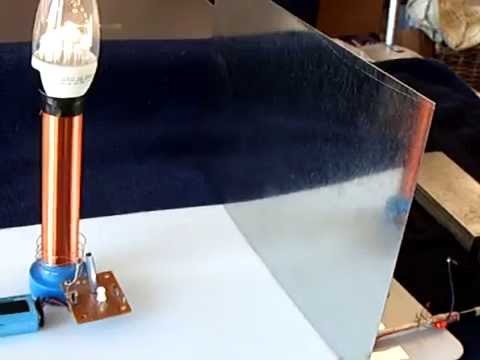
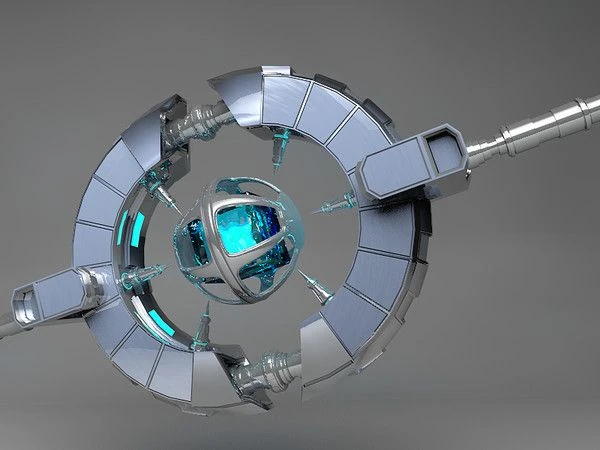
Building upon these foundational principles, the concept of a zero point energy generator proposes a revolutionary mechanism: if the vacuum of space is saturated with vast, untapped energy, could we engineer a device to harvest it? Proponents of this advanced technology envision a system capable of extracting fluctuations from the quantum vacuum and converting them into usable electrical or mechanical power. Unlike solar panels that rely on sunlight or wind turbines driven by atmospheric currents, a functional generator of this type would theoretically operate anywhere in the universe, drawing power directly from the background noise of space itself.
However, moving from theoretical quantum principles to a practical engineering reality presents monumental hurdles. Mainstream physics maintains a cautious, highly skeptical stance regarding the feasibility of such devices. The primary obstacle lies in the laws of thermodynamics, particularly the second law, which dictates that useful work can only be extracted from a system when there is a difference in energy levels. Since the quantum vacuum is in its lowest possible energy state—the ground state—extracting net energy from it without an external input is traditionally viewed as thermodynamically impossible. Critics often categorize zero-point harvesting concepts alongside perpetual motion machines, arguing that any system attempting to draw continuous power from a uniform ground state will ultimately violate the conservation of energy.
Despite these formidable theoretical barriers, a long line of inventors and alternative researchers have pursued the dream of free-energy devices. Historically, thinkers like Nikola Tesla speculated on ambient energy present in the environment, believing that the Earth and its surrounding atmosphere were bathed in dynamic electrical currents waiting to be tapped. In the mid-20th century, inventors such as T. Henry Moray claimed to have built radiant energy devices that drew power from invisible sources, though these claims were never independently verified or accepted by the broader scientific establishment. In contemporary times, theoretical physicists occasionally publish papers exploring quantum vacuum extraction methods, though these discussions usually focus on microscopic scales or cosmological phenomena rather than powering household appliances.
If the engineering challenges could ever be overcome, the implications of a successful zero point energy generator would be nothing short of revolutionary. Our current energy infrastructure is heavily centralized, relying on transmission lines, large power plants, and finite resource extraction. A decentralized, highly portable energy device that draws power from the quantum vacuum would completely dismantle existing economic and geopolitical power structures centered around oil, gas, and coal. Energy scarcity could become a relic of the past, transforming industries from agriculture to water desalination. Furthermore, space exploration would be fundamentally altered; spacecraft equipped with limitless power sources would no longer be weighed down by massive fuel tanks, opening the door for interstellar travel and permanent human colonies across the solar system.
Even if a practical, scalable device remains beyond our current technological horizon, the pursuit of zero point energy pushes the boundaries of human ingenuity. It forces physicists to probe deeper into the mysteries of the quantum vacuum, dark energy, and the fundamental nature of reality. Sometimes, visionary concepts that seem impossible today lay the groundwork for unexpected breakthroughs tomorrow. Whether the zero point energy generator ultimately transitions from theoretical speculation into a tangible reality or remains an inspiring thought experiment, it serves as a powerful reminder of the vast, unseen depths of the universe waiting to be understood.